The Art of the Pass: Football’s Finest Conductors (20–11)
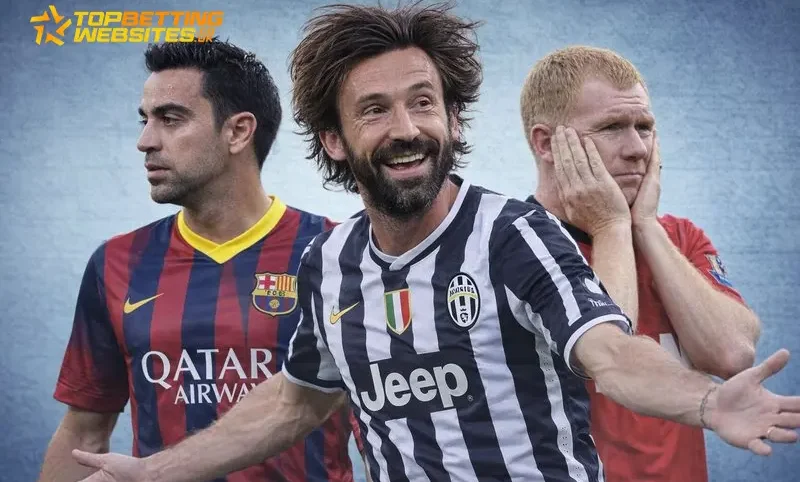
Before spreadsheets and heat maps muscled in, football folk already knew the value of a proper pass. Cast your mind back to 1872 at the West of Scotland Cricket Ground in Partick: Scotland frustrated a bigger, burlier England with a web of short exchanges the papers called ‘pattern-weaving’. That thread runs through to modern possession play — the grandparent of the tiki-taka many of today’s elite sides swear by. One truth endures: passing is the game’s purest currency. If you’re sizing up the weekend’s action, our guide to the best betting sites could be your first port of call before kick-off.
How we’ve judged it
This isn’t a dribblers’ beauty contest. We’ve weighed vision, variety, tempo control, execution under pressure, and how often these artists unlocked matches at the highest level. Right then — the count begins from 20 down to 11.
20. Roberto Baggio
The Divine Ponytail wasn’t just a scorer of sublime goals; he was a conjurer between the lines. Baggio could disguise a through ball like a poker pro hides an ace, slipping runners in with that velvet right foot. From Fiorentina to Juventus and on to Brescia, he stitched attacks together with a playmaker’s poise and a finisher’s nerve.
19. Wesley Sneijder
At Inter under José Mourinho, Sneijder was the metronome and the dagger in the same breath. In 2010 he toggled between deep dictation and killer final balls, steering the Nerazzurri to Europe’s summit. Crisp weight, quick pictures in his head — he made a demanding role look like a kickabout.
18. Juan Román Riquelme
The archetypal enganche. For Boca Juniors he slowed the game to his own heartbeat, then split it open when it suited him. Riquelme captained Argentina to Olympic gold in 2008, feeding a certain Lionel Messi, and at Villarreal he turned a provincial club into a continental nuisance — all with passes that paused time.
17. Sergio Busquets
Proof that you don’t need to sprint to be sensational. Busquets speaks football’s quiet language: body shape, one-touch angles, the cheeky reverse that takes out three men. As Vicente del Bosque once mused, watch the match and you might miss him; watch him and you’ll see the whole match. Barcelona and Spain built dynasties on his economy.
16. Wayne Rooney
Listed as a striker, rewired as a quarterback. Rooney could leather one into the top bin, yes, but as the years went by he started dropping in, spraying 40-yard switches and slide-rule passes like he’d always been a No 10. A complete footballer with a radar to match the roar.
15. Xabi Alonso
If passing were a golf bag, Alonso had every club. Those raking diagonals from the centre circle, the disguised verticals, the little layoffs to lure a press — he ran midfields for Liverpool, then Real Madrid and Bayern, like an orchestra conductor in boots. No fuss, just distribution that set a platform for stars to shine. Now thriving in management, you can see the same control on the touchline.
14. Zinedine Zidane
All the talk is about the first touch — and fair enough, it was a cushion from the gods — but Zidane’s passing was equally outrageous. Left, right, inside, outside of the boot; he could thread the lot while being mugged by two midfielders. At Juventus and Real Madrid, team-mates lived off his timing.
13. Cesc Fàbregas
Arsenal fans still purr about those early Emirates years when Fàbregas ran games like a seasoned pro in a teenager’s body. Slide passes, clipped balls over the top, wall passes round the corner — the full catalogue. Back at Barcelona he collected medals, and at Chelsea he produced that outrageous first-time assist for André Schürrle at Burnley. Vision you can set your watch by.
12. Glenn Hoddle
Hoddle had a wand of a right foot and the audacity to use it. For Spurs and Monaco he painted passes onto runners — dinks, drives, reverse angles — all delivered with balance and swagger. The purists adored him because he made difficult things look inevitable.
11. Michel Platini
Yes, the goals at Euro ’84 were iconic, but Platini’s passing brain powered everything for France and Juventus. He saw seams in defences others didn’t know existed, threading play through tight European nights and setting the rhythm from midfield. A conductor in the truest sense, as ruthless as he was refined.
From the Scottish weavers of 1872 to the modern midfield maestros, the game keeps proving that the right pass at the right time is football’s greatest cheat code. The top 10? That’s where the arguments really start — and we’ll get to them soon enough.