Fans’ Top 20 Greatest Football Teams – A Proper Pundit’s Verdict
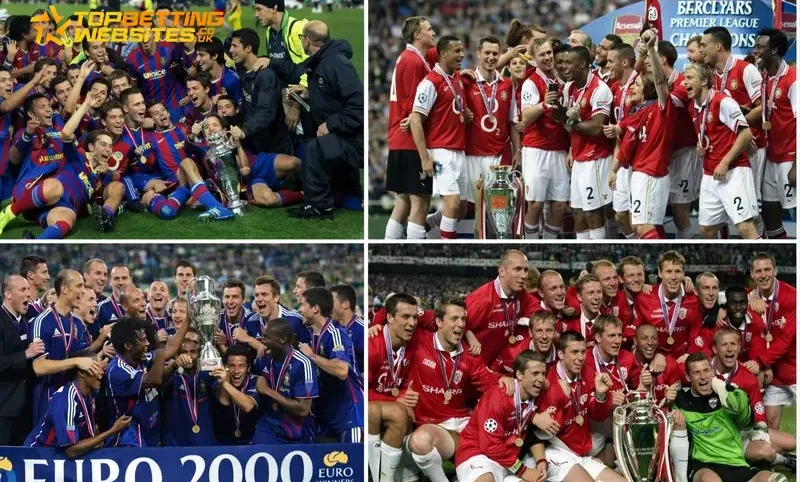
Ask ten football fans who the greatest team of all time is and you’ll get eleven answers. But a fresh OLBG fan vote has put a line in the sand, stacking the most iconic sides in order. Some you’ll nod along with, others will have you waving your scarf at the telly. Here’s my take on the lot.
The fans have spoken
Before we dive in, remember: this is the will of the terraces. Decades, styles and eras collide, from black-and-white brilliance to the data-driven domination of today. It’s not flawless, but it’s a cracking snapshot of how supporters see football’s pantheon right now.
And the verdict? Manchester United’s 1998–99 Treble winners sit top of the tree—fans’ No 1 side in football history.
Places 20–11: Heavyweights just shy of the top table
20) France (1982–86) – Platini’s Les Bleus lit up Europe with swagger at Euros and World Cups, all technique and tempo. They don’t quite crack the ten, but the artistry still echoes.
19) West Germany (1972–74) – Beckenbauer’s elegance, Müller’s goals: a machine that mixed efficiency with class, capped by the ’74 World Cup on home soil.
18) Ajax (1971–73) – Cruyff and total football in its purest form. A philosophy as much as a team, triple European champions who changed how the game is played.
17) Bayern Munich (1973–76) – From Maier to Müller, Hoeness to Beckenbauer, they reeled off three straight European Cups and set the Bavarian standard.
16) Nottingham Forest (1978–80) – Brian Clough’s miracle-workers. Promoted, champions of England, and back-to-back kings of Europe. Romance, rebellion and results.
15) AC Milan (1988–90) – Sacchi’s press-and-possession revolution with Baresi, Maldini, Gullit and Van Basten. Tactically ruthless; Europe twice conquered.
14) Barcelona (1993–94) – Cruyff’s Dream Team, playing adventurous, expressive football. Domestic dominance, European nights—an era that paved the way for what came later.
13) Brazil (1982) – The purists’ pick. Zico, Socrates and company were a carnival with a ball, even if the trophy slipped away. Beauty without the bow on top.
12) Manchester City (2017–18) – The Centurions. Guardiola’s first great English side hit 100 points, reset domestic standards and made 90 look ordinary.
11) France (1998–2000) – World and European champions back-to-back, with Zidane the conductor. Pragmatic, powerful and clutch on the biggest stages.
10–1: The elite of the elite
10) Real Madrid (1984–90) – La Quinta del Buitre brought glamour and goals. Five straight La Liga titles and back-to-back UEFA Cups: a juggernaut before the Galácticos were a glint in Florentino’s eye.
9) Manchester United (1966–68) – From tragedy to triumph. Sir Matt Busby rebuilt a masterpiece with Best, Law and Charlton—the only club team-mates to all win Ballons d’Or—topping it with the ’68 European Cup at Wembley.
8) Manchester City (2022–23) – At last, the Treble. League over Arsenal, FA Cup over United, and a first Champions League sealed against Inter. Haaland’s 52-goal rampage, De Bruyne’s craft and Rodri’s control made history feel inevitable.
7) Arsenal (2003–04) – The Invincibles: 38 league games, zero defeats. Henry gliding, Vieira bossing, Bergkamp painting pictures. A one-trophy season keeps them outside the very top, but perfection over nine months is no small thing.
6) Spain (2008–12) – International football’s iron grip. Euro–World Cup–Euro—three straight majors—built on a midfield of Xavi, Iniesta, Busquets, Alonso and co. Tiki-taka suffocated opponents and defined a generation.
5) Real Madrid (1955–60) – The founding fathers of European supremacy. Five European Cups in a row, Di Stéfano and Puskás rewriting the limits, and that 7–3 final in 1960 still a reference point for attacking brilliance.
4) Liverpool (1975–84) – Relentless. Seven league titles, three European Cups, a UEFA Cup and a stack of domestic silver under Paisley and Fagan. Dalglish, Souness, Rush—serial winners who made victory look routine.
3) Brazil (1970) – The beautiful game immortalised. Pele, Jairzinho, Rivelino and Carlos Alberto danced through Mexico, winning all six games and dismantling Italy in the final. Poetry in yellow and blue.
2) Barcelona (2008–12) – Guardiola’s blueprint: pressing, precision, positional play. Three La Ligas, two Champions Leagues, and that 2011 masterclass against Manchester United. Messi at full throttle, Xavi and Iniesta dictating the rhythm of an era.
1) Manchester United (1998–99) – The first English Treble, carved out the hard way. A fierce title race, FA Cup over Newcastle, and Europe navigated via Barcelona, Inter and Juventus before that astonishing late heist against Bayern. Drama, depth and destiny under Sir Alex.
Pundit’s take: Did the fans get it right?
United ’99 at No 1 is hard to knock—quality, character and comebacks galore. Barca’s prime at No 2 is fair; they changed the sport’s language. Brazil ’70 as the highest-ranked national side makes sense, even if Spain’s three-peat screams sustained dominance over perfection.
Arsenal’s Invincibles spark the eternal debate: unbeaten purity versus multi-trophy seasons. City ’22–23 finally added Europe, but City ’17–19 arguably played the slicker stuff week-to-week. And if you’ve got Forest and Ajax in your teens, you know the list is stacked.
In short: it’s a proper mix of style, substance and storyline—teams that didn’t just win, but defined how football felt in their time. If you fancy a flutter on the next great dynasty, have a look at our best betting sites to weigh up the odds before the next era kicks off.
The last word
Greatness wears many shirts: the ruthlessness of Liverpool ’77–’84, the imagination of Brazil ’70, the control of Spain and Barcelona, the resilience of United. The fans’ ranking doesn’t close the debate—it keeps it gloriously alive.