The table nobody wants to top: Man City lead 2025/26 fan arrests as pressure mounts on policing
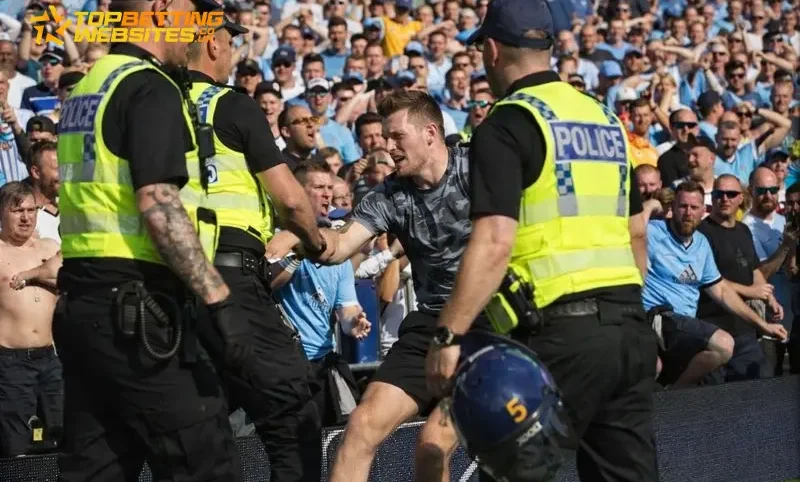
It’s the league table nobody wants to win. The Home Office has laid bare a bruising set of numbers for 2025/26, with arrestable incidents logged at 1,644 fixtures across England and Wales—the most since the UK Football Policing Unit began tracking the data in 2017/18. And when you break it down club by club, the picture is as uncomfortable as it is instructive.
The grim numbers, the bigger context
There’s no single bad apple here; some of the country’s biggest clubs are bunched close together, underlining that disorder isn’t confined to one postcode or one set of colours. Police forces have been pushing for extra funding to manage matchdays, and on this evidence their case is getting stronger by the week.
Club-by-club: the top ten for 2025/26 fan arrests
1) Manchester City — 102 arrests. A runaway lead City will want nothing to do with. Dominant on the pitch, yes, but well clear in the wrong column off it. They also sit second nationally for active banning orders on 86.
2) Chelsea — 76 arrests. London’s highest figure by a distance. There’s a sizeable gap to third, but still a country mile behind City’s tally.
3) Manchester United — 67 arrests. No shock that a fanbase this vast crops up near the top. United take the bronze in this unwanted race, their following stretching the length and breadth of the country.
4) Arsenal — 66 arrests. Reigning champions but fourth in this list. Big games across the Premier League and Champions League drew big numbers—and, regrettably, big flashpoints.
5) Millwall — 63 arrests. A reputation that often precedes them, and this season’s figures won’t change the narrative. With West Ham in the Championship next term, that derby dynamic could nudge this total again.
6) Everton — 62 arrests. Ten more than their neighbours across Stanley Park. Between the two Merseyside clubs, that’s 114 arrests with just a couple of miles separating the grounds.
7) Leeds United — 59 arrests. Back in the top flight and back in the spotlight. The intensity that defines Leeds follows them whatever the division.
8) Portsmouth — 55 arrests. A standout inclusion outside the usual big-city elite. Fratton Park still crackles—and occasionally boils over.
9) Liverpool — 52 arrests. Level with Spurs but placed higher due to a greater number of banning orders among supporters. A club with one of the country’s largest travelling followings won’t enjoy seeing its name here.
10) Tottenham Hotspur — 52 arrests. Bottom of this particular list, but nobody’s celebrating a place in the top ten.
Banning orders: the backdrop
For added context, West Ham currently hold the most banning orders of any club in England and Wales at 121, with Manchester City next on 86. That wider disciplinary picture helps explain why certain names recur when trouble flares, even if arrest totals can ebb and flow year to year.
What needs to change
Matchday disorder isn’t solved by platitudes. It’s about resourcing—more trained spotters, smarter use of bodycams, proper segregation, sensible kick-off times and transport planning, and bans that actually bite. Clubs can’t outsource the entire problem to the police; investment in stewarding quality and post-match egress matters just as much as what happens at 3pm.
Supporters, the vast majority of whom behave impeccably, shouldn’t be tarred by the few who don’t. But let’s be real: when the Home Office is logging incidents at record levels, the game has to respond with the same urgency it would for anything affecting player welfare or broadcast delivery.
Final word
This is a sobering snapshot of a brilliant sport at its worst moments. betting sites uk are part of the matchday conversation for many fans, but the real priority is keeping people safe and ensuring that a day at the football doesn’t end at a charge desk. No one wants to top this table next season—least of all Manchester City—so here’s hoping the numbers take a sharp turn south by spring.