Whistles and Wages: World Cup 2026 Refs Cash In as VAR Muscle Grows
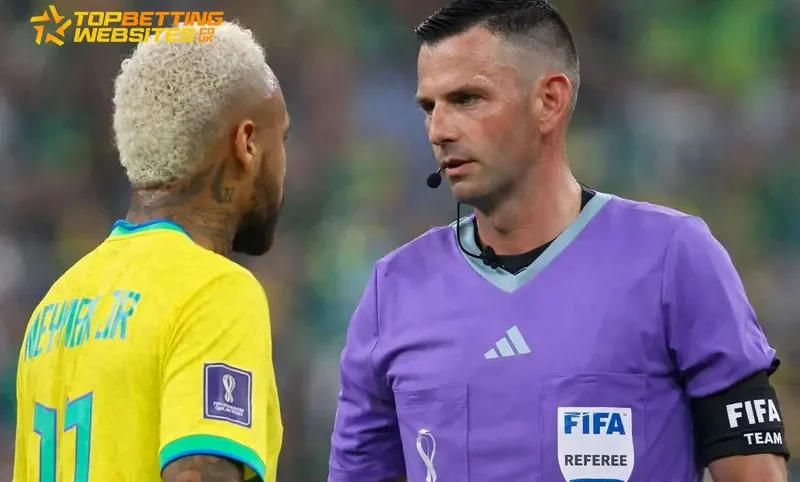
It’s not just the megastars banking big at World Cup 2026 — the officials are in for a windfall too. With the tournament ballooning to 48 teams and scrutiny at an all-time high, FIFA’s upped the ante for the men and women with the whistle.
According to The Times, World Cup referees are set to earn around $100,000 (roughly £75,000) each for their tournament involvement — about double the going rate from Brazil 2014 — with bonuses climbing through the knockouts and the biggest cheque reserved for the final on 19 July.
For those tracking odds and markets ahead of kick-off, our best betting sites hub has you covered.
Record pay for the world’s top officials
Premier League referees typically clear in the region of £170,000–£180,000 a year once match fees and bonuses are tallied, depending on seniority. The World Cup, crammed into a five-week sprint, offers a genuine chance to match or even eclipse that in one glorious burst — a serious statement from FIFA to attract the crème de la crème.
The escalation is hardly a surprise. With a 48-team format and 104 matches to police, every decision will be beamed around the world and dissected from every angle. If you want elite composure under the fiercest glare, you have to pay for it.
Oliver and Taylor on duty — plus Gillett on VAR
Two of England’s finest, Michael Oliver and Anthony Taylor, have been tapped for the showpiece. Between Premier League appointments and deep runs in the FA Cup and Champions League, both are understood to have already banked around £250,000 this season — and the World Cup will be a tidy add-on to an already bumper year.
Australian Jarred Gillett, a regular in the Premier League, is heading to North America in a specialist VAR role, reflecting how highly he’s rated in the booth.
New tournament rules: time-wasting in the crosshairs
Expect a brisker spectacle. Substitutes will be told to leave the pitch within 10 seconds, and any player going off for treatment must stay off for a full minute before returning. There’s a five-second countdown for throw-ins and goal kicks — dawdlers beware — and players who hide their mouths while squaring up to officials risk an immediate early bath. It’s a culture reset aimed squarely at game management theatrics.
VAR given broader powers
The video officials aren’t just along for the ride. For the first time, VAR can overturn a corner that was incorrectly awarded and review dismissals that arise from a second yellow — two long-running gripe points for players and supporters alike. There’s also the scope to intervene and chalk off goals for attacking fouls even before the ball has crossed the line. In short: fewer howlers, more accountability.
Biggest officiating operation in World Cup history
This summer’s crew is vast: 52 referees, 88 assistant referees and 30 VAR specialists spread across 104 fixtures — the largest officiating footprint the tournament has ever seen, by some margin. With the stakes sky-high and the margins wafer-thin, the officials will earn every penny of that record pay packet.
Make no mistake: the spotlight will be unrelenting. But with sharper rules, beefed-up VAR, and a record pay structure to match the pressure, the stage is set for the best in the business to keep football’s biggest carnival on the straight and narrow.