Michael Owen’s Six Words That Still Sting on Merseyside
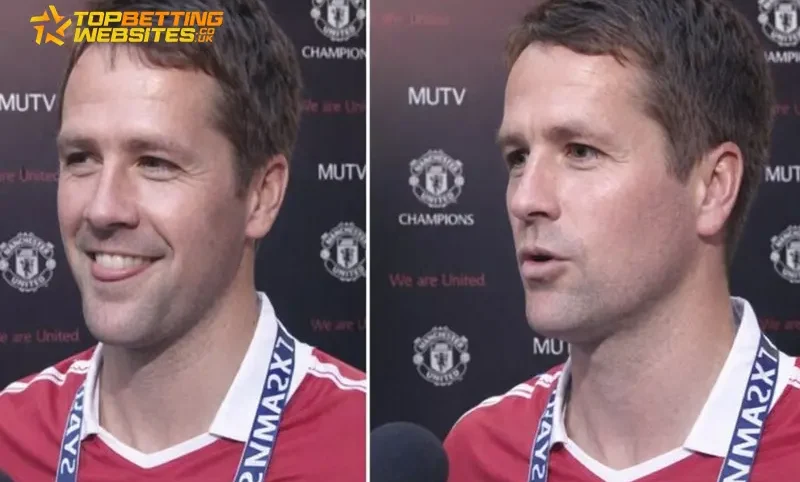
Michael Owen is football’s great paradox on Merseyside: the Anfield wunderkind who swapped red for, well, the other red—and then delivered a line that still echoes around the Kop. After Manchester United clinched the 2010–11 Premier League title, Owen, medal around his neck, coolly dropped this on MUTV: “If you can’t beat them, join them.” For many Liverpool supporters, those six words cut deeper than any derby defeat.
From Anfield idol to Old Trafford opportunist
Let’s not rewrite history: Owen was electric for Liverpool. A Ballon d’Or in 2001—off the back of a Cup treble that included the FA Cup, League Cup and UEFA Cup—plus the UEFA Super Cup, capped by that unforgettable hat-trick in England’s 5–1 in Munich. His 158 goals for the Reds make him the club’s eighth-highest scorer. No Englishman has lifted the Ballon d’Or since.
But football careers pivot on daring choices. In 2009, Owen made the boldest of the lot, pitching up at Old Trafford. Sir Alex Ferguson even handed him the fabled No 7 shirt vacated by Cristiano Ronaldo. The gamble? A shot at the one medal that had eluded him. The cost? A legacy in Liverpool that would never quite recover.
The line that lit the fuse
United’s 2010–11 triumph delivered Owen that precious Premier League medal. Then came the line—half-grin, half-needle—that still riles Merseyside: “If you can’t beat them, join them.” For Scousers who’d once serenaded him, it felt like salt in an open wound. For United fans, it was part payback for all those years Liverpool had their number. Football, as ever, thrives on the thin edge between glory and grievance.
Fancy a flutter on football’s fiercest rivalries? Our guide to the best betting sites is where the smart punters start—but remember, moments like Owen’s quip prove that narratives matter as much as numbers.
Galáctico gamble and the long road back
Rewind to 2004: Owen headed to Real Madrid to join a star cast—Zidane, Ronaldo, Beckham, Figo, Roberto Carlos. Who wouldn’t be tempted? He returned a tidy 16 goals in 45 games, but never fully set the Bernabéu alight. To add a twist of irony, Liverpool then staged Istanbul in 2005—arguably the greatest Champions League final of the lot—while Owen watched from Spain.
He pushed for an Anfield reunion, but it was Newcastle United who paid the going rate—about £16 million—and injuries bit hard. Across four stop-start seasons, he produced 30 goals in 79 appearances before the Magpies dropped into the Championship in 2009.
Reinvention, redemption, and the medal he craved
Enter Manchester United, stage left. Owen’s role under Ferguson was selective rather than central, but significant all the same—right down to that title-winning campaign and the iconic No 7 on his back. He departed Old Trafford in 2012, took a final swing with Stoke City, and called it a day at 33. The medal box was finally complete; the goodwill on Merseyside, not so much.
Bridging the divide? Not quite
In 2016, Liverpool named Owen their first international ambassador—a move that went down like a lead balloon with some of the faithful. He was even booed in a charity match three years later. The animosity may have cooled a fraction with time, but plenty won’t ever forgive the Old Trafford chapter. Such is life when you cross a divide that only a dozen players have ever traversed between Liverpool and Manchester United—Owen and Paul Ince among them.
Pundit’s verdict
Did the United switch pay off? On the balance sheet, absolutely: a Premier League medal is the game’s ultimate domestic currency. On the emotional ledger, it’s murkier. Owen chose medals over mythology, and then twisted the knife with a killer soundbite. That’s football in England: trophies glitter, but memories—good and bad—never fade.
Statistics via Transfermarkt, correct as of 25/08/26.