The Price of the Whistle: What Premier League Referees Really Earn
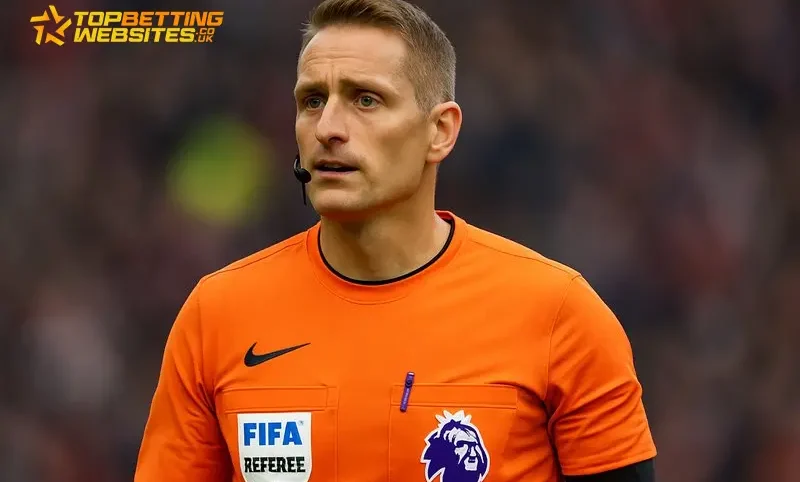
Refereeing in the Premier League: the job that makes you public enemy number one on a Saturday and Sunday. Fans will scream, pundits will nitpick and social media will chew you up — yet a fair few officials still choose the career. Why? Because, as any sensible person will point out, the money is not shabby.
How much do Premier League referees earn?
You’ve got to remember we didn’t always have full-time refs. When the PGMOL professionalised refereeing in 2001 it was a game-changer — officials moved from part-time shifts to proper contracts, with the starting salary then reported at around £35,000. Fast-forward to today and things look very different.
Official figures discussed by Howard Webb put the average total package for a top-flight referee at roughly £170,000-£180,000 a year when you factor in the base salary, match fees and performance bonuses. On top of that, match fees are estimated at about £1,100 per game — so the more high-profile appointments you pick up, the fuller your pockets.
Base contracts vary by experience: expect something in the region of £72,000 at the lower end up to roughly £148,000 for the more senior names. Tie that in with bonuses and high-stakes fixtures and the elite officials — think Anthony Taylor or Michael Oliver — can approach the quarter-of-a-million mark annually. The newer faces in Select Group 1 land nearer the mid-six-figure bracket, around £125,000 a year.
Who are the big earners and the new boys?
There are household names among referees. Mike Dean, for example, left the pitch after a long career reportedly on around £200,000 a year and has since found a comfortable second act in broadcast punditry. Meanwhile Michael Oliver, Anthony Taylor and their contemporaries sit at the top of the pay scale — and crucially, at the sharp end of the scrutiny.
This season’s promotions show the churn behind the scenes: Lewis Smith, Farai Hallam, Adam Herczeg, Tom Kirk, Ruebyn Ricardo and Ben Toner have been added to the supplementary list for Select Group 1. Sam Barrott was elevated in 2024/25 and, at just 30 when he took charge of his first top-flight game, is an example of how quickly careers can accelerate when you show the goods.
Europe’s picture: Champions League and league-to-league pay
If you do well domestically, European nights follow — and so do different rates. Champions League match payments are tiered: lower-profile fixtures pay a few hundred quid for assistants and under £1,000 for some referees, while elite ties can reward the match official with several thousand pounds; the very top matches are worth thousands more.
Interestingly, England’s top-tier officials are not the best paid in Europe. La Liga referees are reported to have a single basic annual salary north of £124,000 — and some accounts suggest Spain’s match officials are better remunerated than their English counterparts. Serie A, Ligue 1 and the Bundesliga have their own scales, generally lower than the very top of the Premier League’s pay structure but competitive enough to make refereeing a genuine profession across Europe.
Why the pay matters — and why respect doesn’t always follow
Let’s be clear: money doesn’t buy love. Referees are compensated because the job demands full-time dedication, continual training and a level of mental toughness few careers test. Yet even with solid salaries, they are regularly pilloried for human errors that are, frankly, inevitable when decisions are made in a split-second.
From my point of view, if you’re going to heap abuse on officials, at least know that some of them have toiled from the grassroots up and now do the job professionally — and are paid accordingly.
Want to be one of them? The route to the top
Becoming a Premier League referee is straightforward on paper but brutally competitive in reality. Start with The FA Referees Course via your County FA (you can join at 14), progress through the levels — 7 up to 4 — and then through levels 3, 2B and 2A. Promotions depend on assessments, law exams and consistent observer marks, and moving from the EFL into Select Group 1 usually involves interviews and strict merit tables. It takes time, thick skin and a knack for keeping calm under pressure.
And if you enjoy a flutter while watching the game, you can find tips and markets at best betting sites, though I’d advise keeping decisions on referees and bets strictly separate.
At the end of the day, Premier League referees get paid to do a difficult job under impossible conditions. Some earn handsomely for their experience and accuracy — the rest of us would do well to remember they’re human, not robots. They may never be loved, but they are certainly compensated like professionals — and often with good reason.
Sources: PGMOL briefings, reporting from The Times and The Athletic, and historical context from refereeing bodies and major outlets.